

Scenario
You glance over at your child. They are completely still, eyes fixed on the tablet, headphones on, totally unreachable. They have been sitting there for two hours.
A part of you is relieved. The house is quiet. You are able to get things done.
But another part of you is asking the question that will not go away: What is this actually doing to them?
Not just their eyes or their posture. But their empathy, their patience, their sense of right and wrong. Their ability to sit with a feeling long enough to understand it.
This is the question most articles about screen time do not answer. They count hours and cite sleep studies. But parents raising children between 7 and 11 are asking something deeper: Is my child learning how to be a good person or is the screen getting in the way?
The research on screen time vs reading for children, it turns out, has a great deal to say about this. And the answer is more nuanced and more actionable than most parents expect.
Table of Contents
TL;DR
Excessive recreational screen time in children ages 7–11 is consistently linked to reduced empathy, weaker emotional regulation, and less time for the experiences that build values. Story time, particularly illustrated books read individually or one-on-one is one of the most research-supported tools for building prosocial behaviour, moral reasoning and emotional intelligence. The goal is not zero screens. It is intentional balance, with story time protected as a non-negotiable part of your child’s week.
The Question Every Parent Is Actually Asking
Before we look at the research, it is worth naming what parents are genuinely worried about because it is rarely about the number of hours alone.
When parents ask about screen time and children, what they are really asking is:
- Is my child becoming less kind because of what they are watching?
- Are they losing the ability to sit with boredom, difficulty, or emotion?
- Are they absorbing values from screens that I have not chosen for them?
- Is there something important: empathy, imagination, moral reasoning that only develops away from a screen?
These are the right questions. And they deserve better answers than “limit to two hours a day.
What Screen Time Is Really Doing to Children Ages 7–11
The research on screen time and child development is extensive and broadly consistent on several points.
What the research shows:
| Impact Area | Finding | Source |
| Empathy | Excessive screen time can impair the development of empathy and the ability to read social cues, as children miss face-to-face interaction practice | Psychology Today, citing American Pediatric Association |
| Emotional regulation | Higher screen use is linked to increased frustration, reduced tolerance for challenging tasks, and weaker impulse control | Multiple peer-reviewed studies, BYU Family Perspectives, 2023 |
Brain development | Research shows that brain connectivity known to enhance reading appears weaker in children who engage with screens more and print less | Education Week, citing neuroimaging research, 2024 |
| Values absorption | Children ages 7–11 absorb attitudes and values from the content they consume without the guidance of a trusted adult to contextualise it | ScienceDirect, Journal of Child Psychology, 2023 |
| Screen prevalence | In the United States, 75% of parents whose children use screen media apply no time limits | Common Sense Media, 2025 |
It is important to be precise here. The research does not say that all screen time is harmful. It says that excessive recreational screen time, particularly passive consumption of fast-paced or unmediated content consistently produces these outcomes. The type of content, the duration, and whether a parent is present and engaged all significantly affect the impact.
But there is one finding that stands out above all others for parents of 7–11 year olds:
Screen time displaces the experiences children need most, reducing face-to-face interaction while raising kind kids in the digital age becomes increasingly challenging without intentional boundaries.
Key Takeaway: The greatest risk of excessive screen time for children ages 7–11 is not what screens do directly, it is what they prevent. Time spent passively on screens is time not spent building empathy, emotional vocabulary and moral reasoning through real human interaction and story.
What Reading and Story Time Are Actually Building

When weighing screen time vs reading for children, if digital habits are taking something away, what is story time giving back?
The research here is equally consistent and in some areas, remarkably specific.
Story time builds prosocial behaviour. A 2025 meta-analysis published in the journal Early Childhood Education, reviewing 21 studies from 10 countries, found that storybook reading has a measurable positive impact on children’s empathy specifically their prosocial behaviour, including kindness, sharing, and moral responsiveness. The effect was strongest when children read individually or one-on-one with an adult, rather than in groups.
Story time builds moral reasoning. Harvard’s narrative transportation theory explains why: when children become absorbed in a story, they mentally “travel” into the character’s world. They experience the character’s dilemmas, feel the consequences of their choices, and internalise values, not because they were told to, but because the story made them feel why it matters. This is why lessons from a beloved book at age 8 are often carried into adulthood.
Story time builds vocabulary and emotional intelligence. Research shows that children exposed to stories show significantly faster vocabulary growth than peers who are not. And vocabulary is not just about language, the words a child has for emotions directly shapes their ability to identify, process and regulate those emotions. A child who has the word “humiliated” understands something a child who only knows “sad” does not.
Story time builds brain connectivity for reading. A 2025 study published in Developmental Science (Boston University) using neuroimaging found that children’s brains show significantly greater activation in regions associated with social understanding and language during book reading than during screen-based story consumption. The right hemisphere associated with empathy, imagination and narrative comprehension was distinctly more engaged during live book reading.
What the research shows about story time:
Benefit Finding Source Prosocial behaviour Storybook reading has a significant positive impact on children’s prosocial skills: kindness, sharing, and moral responsiveness Meta-analysis, 21 studies, 10 countries, Early Childhood Education Journal, 2025 Vocabulary growth Children exposed to regular story time show up to 47% faster vocabulary growth Child development research cited in Lunesia, 2025 Empathy development Identification with characters who are different from the reader is the most valuable contribution storybooks make to teaching empathy to children ages 7-11 and building long-term emotional intelligence. NIH / PMC, developmental psychology framework Brain activation Book reading produces significantly greater activation in right-hemisphere regions associated with social understanding compared to screen-based stories Developmental Science, Boston University, 2025 Moral development Children who engage in activities promoting moral development show a 20% increase in empathy levels Kohlberg moral development research
Key Takeaway: Story time is not a nice-to-have, it is a research-backed builder of empathy, prosocial behaviour, emotional vocabulary, moral reasoning, and the brain connectivity that supports all of them. For children ages 7–11, it is one of the most powerful values-building tools available.
Screen Time vs Reading for Children: A Direct Comparison
Here is how the two activities compare across the values and skills that matter most for children ages 7–11:
| What You Want to Build | Screen Time | Reading & Story Time |
| Empathy | Passive screen use reduces face-to-face interaction needed to practise empathy Because passive media consumption blocks face-to-face cues, parents must be highly intentional. Read our 8 practical strategies on how to teach kids empathy to offset digital displacement. | Identification with characters builds cognitive and emotional empathy directly |
| Moral reasoning | Content may carry values the parent has not chosen or contextualised | Stories guide children through moral dilemmas with narrative consequences, not lectures |
| Emotional vocabulary | Limited: emotional experience is fast-paced and rarely named | Rich: stories name, explore and model the full range of human emotion |
| Patience and focus | Fast-paced content trains the brain for rapid stimulation, reducing tolerance for slower, harder tasks. Measuring reality against a digital highlight reel actively damages identity formation. Parents must look closely at what causes low self-esteem in children in a device-driven environment to protect their innate self-worth. | Reading builds sustained attention and comfort with slower, deeper engagement |
| Values formation | Absorbed passively from content often without adult mediation | Actively processed through character and narrative especially powerful one-on-one |
| Social confidence | Online interaction lacks body language, tone and real-time consequence | Story discussion with a parent builds social understanding and conversational confidence |
| Imagination | Largely passive: images and narrative are pre-constructed | Active: children construct the world of the story in their own minds |
The Nuance: Not All Screen Time Is Equal
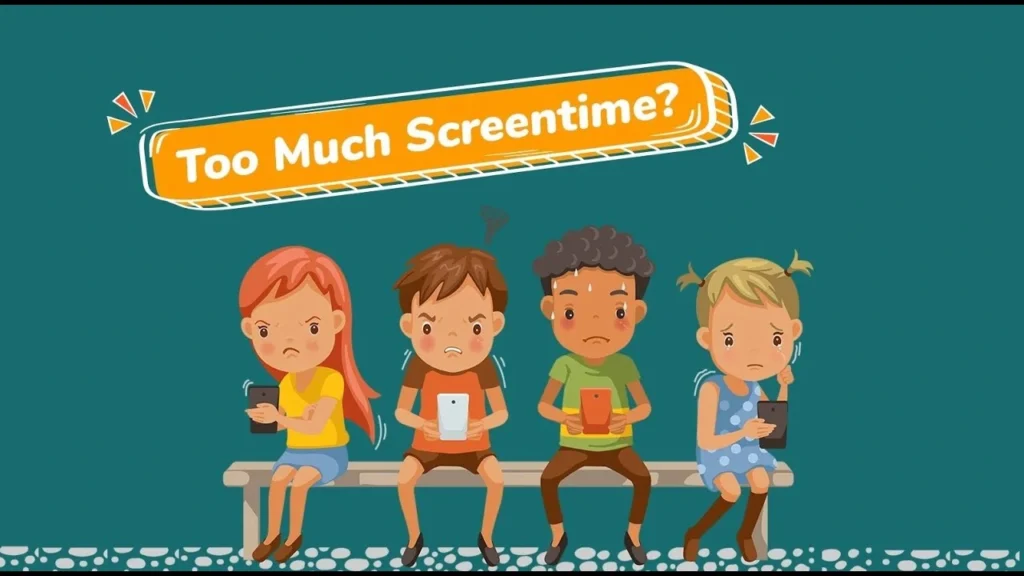
This conversation is not complete without acknowledging what the research also shows: not all screen time is harmful, and not all of it is equal.
There is a meaningful difference between:
- Passive recreational consumption: binge-watching fast-paced videos or playing repetitive games with no social or educational dimension. This is the category most consistently linked to negative developmental outcomes.
- Educational and interactive content: well-designed apps, programmes and videos that engage children’s thinking, introduce new concepts or model prosocial behaviour. When parents are present and engaged, even this screen time can support learning.
- Co-viewing with an adult: research consistently shows that the presence of an engaged parent transforms the developmental impact of screen time. A parent watching and discussing a programme with their child activates many of the same values-building mechanisms as shared reading.
The problem is not the screen itself. It is the unmediated, unstructured, unlimited passive consumption that has become the default for millions of children, not because parents do not care, but because it is the path of least resistance in an exhausting busy world.
Key Takeaway: The screen time most consistently linked to harm is passive, recreational and unmediated. Educational content watched with an engaged parent is a different category entirely. The goal is not to eliminate screens, it is to ensure they are intentional, not default.
How to Find the Balance That Works for Your Family
Rather than a rigid hour count, consider building your family’s approach around these three principles:
Principle 1: Protect story time first. Protect reading and story time first. Before deciding how much screen time is acceptable, decide how much dedicated story time through active reading is non-negotiable. Most child development experts recommend a minimum of 20 minutes of reading daily for children ages 7–11 not as homework, but as a protected, enjoyable ritual. If story time is carved out first, screens fill the remaining space rather than consuming it.
Principle 2: Replace passive screen time with presence. The research is consistent: when a parent is present and engaged, the developmental risk of screen time drops significantly. You do not have to watch everything together. But creating regular co-viewing moments and discussing what you watched activates the same values-building conversations that story time does naturally.
Principle 3: Let boredom exist. One of the least discussed but most important findings in child development research is that boredom is valuable. Children who have unstructured, screen-free time develop creativity, emotional regulation and self-directed thinking in ways that scheduled activities and screen entertainment cannot replicate. The discomfort of boredom is, in itself, a values lesson: you do not need constant stimulation to be okay.
Here’s a practical framework for ages 7–11:
| Time | Recommendation |
| Daily reading | Minimum 20 minutes; independent or with a parent |
| Recreational screen time | 1–2 hours maximum (health expert consensus, 2025) |
| Educational screen time | Flexible: with parental awareness of content |
| Screen-free time | At least one hour daily with no structured activity |
| Screen-free zones | Mealtimes, the hour before bed and during conversations |
The Role of Stories in Teaching Values
There is a reason human beings have told each other stories for as long as we have existed. Stories are the oldest and most effective technology for passing values from one generation to the next.
When a child reads about a character who faces a moral dilemma, whether to be honest when it costs them something, whether to include the child everyone else excludes, whether to apologise when they are wrong, they are not being told what to do. They are feeling what it is like to be the kind of person who does the right thing. And that feeling, embedded in narrative, is remembered long after a rule or a lecture has faded.
This is the philosophy at the heart of the 101 Shapes of Manners series illustrated stories for children ages 7–11, built around characters who navigate the real social and emotional challenges of childhood: kindness, respect, confidence, empathy, and the courage to be good even when it is hard – passing down the 5 core values every child ages 7–11 should be learning right now from one generation to the next.
“You can lecture a child about values. Or you can tell them a story that makes them want to live by them. Only one of those actually works.”
Because the goal was never to produce children who know the rules. It is to raise children who have genuinely internalised them and feel proud of who they are.
📖 Be the First to Discover 101 Shapes of Manners
The 101 Shapes of Manners is a brand-new illustrated social-emotional learning fiction series created specifically for children ages 7–11. Through relatable characters and engaging stories, it builds the values that screen time cannot: kindness, respect, confidence, empathy, and good manners.
👉 [Join the Waitlist Now] — Get exclusive early access and be the first to know when we launch.
Frequently Asked Questions
How much screen time is too much for a 7–11 year old?
Health experts in 2025 recommend a maximum of 1–2 hours of recreational screen time per day for children in this age group, with unlimited time permitted for educational activities under parental guidance. However, the type and context of screen time matters as much as the amount: passive, unmediated consumption is more consistently linked to developmental risks than educational content watched with an engaged parent.
Does screen time affect empathy in children?
Yes, according to multiple research sources. Excessive recreational screen time reduces the face-to-face interaction children need to practise reading body language, facial expressions, and social cues, all of which are foundational to empathy. Research cited by the American Pediatric Association suggests screen time can impair children’s natural empathy development when it consistently displaces human interaction. However, high-quality educational content, especially when co-viewed with a parent, does not carry the same risk.
Is reading better than screen time for teaching children values?
The research strongly favours reading specifically illustrated storybooks for building the values most parents care about: empathy, kindness, moral reasoning, and prosocial behaviour. A 2025 meta-analysis of 21 studies found that storybook reading has a significant positive impact on children’s prosocial skills. Brain imaging research from Boston University shows that book reading produces greater activation in social understanding regions of the brain than screen-based story consumption. That said, educational screen time with parental involvement can also support values development, it is not a binary choice.
What kind of screen time is actually good for children ages 7–11?
Educational and interactive screen time, particularly content that introduces new ideas, encourages reflection, or models prosocial behaviour can have neutral or positive developmental effects, especially when a parent is present and engaged. The category most consistently linked to harm is passive, recreational, unmediated consumption: binge-watching fast-paced content or playing repetitive games for extended periods with no adult interaction or discussion.
How does reading build empathy in children?
Stories build empathy through a process psychologists call narrative transportation, children mentally enter the world of a character, experience their emotions and dilemmas, and internalise the values of the story from the inside out. A 2025 meta-analysis found that storybook reading significantly improves children’s prosocial behaviour, particularly when children read individually or one-on-one with an adult. Research also shows that identifying with characters who are different from the reader is the most powerful mechanism through which stories build cognitive empathy.
Can I use screen time and story time together?
Yes and combining them thoughtfully is arguably the most effective approach. Reading a book and watching an adaptation together, or using a story as a springboard for a conversation prompted by something your child watched, activates the values-building benefits of both. The key is that the adult is present, engaged, and helping the child contextualise what they are consuming whether on a screen or on a page.
101 Shapes of Manners is an upcoming illustrated social-emotional learning fiction series for children ages 7–11. Join the waitlist to be the first to access the series when it launches.