
Knowing how to teach kids empathy is a top priority for modern parents, especially when faced with real-world testing moments. Imagine this scenario:
Your child watches a classmate drop their lunch tray in the school canteen. Food spreads everywhere. Every head turns, concerned but your child laughs.
Or maybe they do not laugh, but they do nothing. They look away and go back to their conversation.
These moments trouble parents deeply. Not because one incident defines a child, but because of what it might reveal about what is or what is not developing beneath the surface.
Empathy – the ability to recognise what another person is feeling, understand why and respond in a way that makes them feel seen, is arguably the most important social-emotional skill a human being can have. And according to growing research, it is declining in the generation of children growing up today.
This is not a reason to panic, rather it’s a reason to act. Because empathy is not fixed at birth, it is a skill and like every skill, it can be taught, practised and strengthened. This guide shows you exactly how.
Table of Contents
TL;DR
Empathy is declining in children, partly due to increased digital media use and reduced face-to-face interaction. Ages 7–11 is the critical window to build it, because this is when cognitive empathy first develops. The 8 most effective strategies are: modelling empathy yourself, asking perspective questions, using stories, validating emotions, building emotional vocabulary, encouraging acts of kindness, exposing children to diverse experiences, and praising empathetic behaviour specifically.
Why Empathy Matters More Than Ever Right Now
Research has shown that the shift away from face-to-face communication has caused a decline in social-emotional skills in young people, with studies suggesting generations raised on technology are becoming less empathic. Teachers are noticing it at school. One middle school dean observed: “Twelve-year-olds play on the playground like 8-year-olds. They don’t seem to be able to put themselves in the place of other children.”
The consequences extend well beyond playground dynamics.
What the research shows:
| Finding | Source |
| Children with higher empathy are more likely to cooperate, help others and form trusting friendships; those with lower empathy may struggle socially and show more aggressive behaviour | Frontiers in Psychology, 2025 |
| Empathy reduces conflict, leads to helping behaviour and is linked to greater success in life generally | Big Life Journal, citing developmental psychology research |
| A 25-year longitudinal study found that parental empathy has measurable ripple effects across three generations | Society for Research in Child Development, 2024 |
| Some studies suggest a generational decline in empathic concern, possibly linked to digital immersion | Frontiers in Psychology / Konrath et al, 2025 |
Empathy is not a soft optional skill. It is a foundational life competence with measurable, long-term consequences for friendships, academic success, mental health and adult relationships.
Key Takeaway: Empathy in children is measurably declining, with digital immersion and reduced face-to-face interaction as contributing factors. Intentional empathy teaching is not a parenting luxury, it is a documented developmental necessity.
What Empathy Actually Is And What It Is Not
Empathy is the ability to recognise emotions in ourselves and others, understand another person’s perspective and respond compassionately in a way that makes them feel seen and valued.
It has two forms that develop at different rates:
Type | What It Means | When It Develops |
Affective empathy | Feeling what another person feels – emotional resonance | Begins in infancy |
| Cognitive empathy | Understanding another’s experience even when different from your own | Develops significantly ages 7–11 |
What empathy is not:
- Sympathy – feeling sorry for someone is not the same as understanding what they feel from the inside.
- Compliance – doing what you are told to avoid trouble is self-preservation, not empathy.
- Agreement – you can empathise with someone without sharing their view.
A child trained to perform empathy, that is, to say the right words in the right situations, is not the same as a child who has genuinely developed the capacity to feel and understand another person’s experience.
[Related Reading: Teach Children to Respect Elders Without Killing Confidence]
Key Takeaway: Empathy has two forms – affective and cognitive. Ages 7–11 is when cognitive empathy develops most rapidly. The goal is genuine empathy, not performed empathy.
Why Ages 7–11 Is the Critical Window
Three reasons make this age window uniquely important for empathy development:
- Cognitive empathy comes into focus. Before age 7, children experience empathy primarily as an emotional reflex, they feel distressed when someone near them is distressed. Between 7 and 11, the brain develops genuine perspective-taking: understanding why someone feels as they do, and considering experiences very different from their own. This makes deliberate empathy teaching possible for the first time.
- Social complexity increases rapidly. New friendships, social hierarchies, in-groups and out-groups. Daily situations now require empathy to navigate well. A child building these skills during this window handles social challenges constructively. A child who is not, is significantly more likely to struggle.
- The patterns formed now persist. Children with higher empathy are more likely to cooperate, help others and form trusting friendships. Those with lower empathy may struggle socially and exhibit more aggressive behaviour. Empathy habits established between 7 and 11 form the foundation for adolescent and adult relationships.
Signs Your Child May Need More Empathy Development
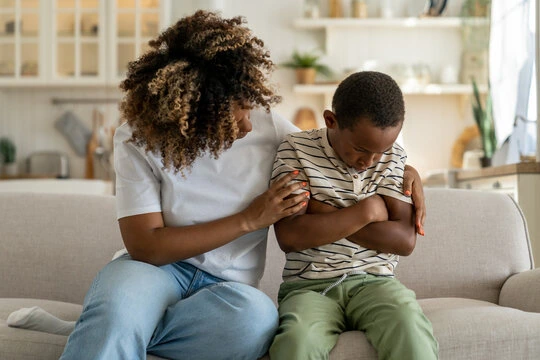
These are common at this age and entirely addressable. If several appear consistently, deliberate empathy teaching is needed:
- Dismisses others’ feelings – “It’s not a big deal,” “Stop being so dramatic”
- Struggles to apologise genuinely – says sorry without understanding what they are apologising for
- Laughs at others’ distress – finds it funny when someone is embarrassed or hurt
- Has persistent friendship difficulties – repeatedly involved in conflict or exclusion incidents
- Defensive when corrected – unable to consider how their behaviour affected someone else
- Shows little interest in others’ lives – rarely asks how someone is or what is going on for them
- Behaves very differently online than in person – says things digitally they would never say face to face
How to Teach Kids Empathy: 8 Proven Ways
Here are the 8 most effective, research-backed strategies to help children ages 7–11 build and strengthen genuine empathy.
1. Model Empathy Visibly and Consistently
When figuring out how to teach kids empathy, the first rule is to model it yourself, so they understand what empathy looks, sounds and feels like. Remember to model empathy even when giving consequences to your child.
How to apply it: Narrate your empathic responses aloud: “That person looks exhausted, I wonder what kind of day they’ve had.” Respond to your child’s distress with empathy first, before correction, advice or solutions.
2. Ask Perspective Questions, Daily
Research shows that simply asking a child to consider another person’s perspective is enough to activate empathic thinking. The habit of asking is what builds the muscle: the answers matter less than the practice.
How to apply it:
At dinner: “Did anyone seem left out today? How do you think they felt?”
After a conflict: “Before we talk about what happened, what do you think was going on for them?”
While reading: “Why do you think that character reacted that way?”
3. Use Stories as Empathy Laboratories
In an experimental study of 110 school children aged 7, those who read and discussed fictional characters’ emotional experiences showed measurable advances in empathy, with positive outcomes stable for six months. Stories serve as perfect playgrounds for learning how to teach kids empathy at a safe emotional distance.
How to apply it: Choose books featuring characters different from your child. After reading, ask: “What was hardest for that character? What do you think they needed?” Connect the story to real life gently, without forcing it.
This is the philosophy behind the 101 Shapes of Manners series, illustrated characters for children ages 7–11 who navigate real emotional challenges, giving children a space to practise empathy before the world asks it of them.
“Stories let children practise understanding others before the world asks them to.”
4. Validate Your Child’s Emotions First
A child whose emotions are consistently validated learns from lived experience that feelings are real and worth responding to. They extend this understanding naturally to others.
How to apply it: Before offering solutions, reflect: “That sounds really frustrating, tell me more.” Avoid the most common dismissals: “You’re fine,” “Stop crying,” “It’s not a big deal.” Name what you observe: “You seem really disappointed. That makes sense.”
5. Build Emotional Vocabulary
You cannot empathise with an emotion you have no word for. The richer a child’s emotional vocabulary, the more precisely they can understand and respond to what others feel.
How to apply it: Introduce one new emotion word per week at a natural moment: disappointed, humiliated, overwhelmed, conflicted, relieved. Notice nuanced emotions in stories and real life: “She looks more frustrated than angry, do you see the difference?”
6. Encourage Acts of Kindness Towards Others
Empathy without action stays abstract. Pairing understanding with kindness, asking children to do something with their awareness of another’s experience, makes empathy solid and habitual.
How to apply it: Create low-stakes opportunities to help others: a neighbour, a younger sibling, a new classmate. Reflect together afterwards: “How do you think that made them feel? How did it make you feel?” Frame it as identity: “You are someone who notices when people need help.”
7. Expose Your Child to Diverse Experiences and People
A child whose world is narrow has limited raw material for cognitive empathy. Widening it even gently, significantly improves empathy development.
How to apply it: Choose books and stories featuring characters from different backgrounds and circumstances. Discuss news events age-appropriately: “What do you think it feels like to be in that situation?” Encourage friendships with children whose experiences differ from your child’s own.
8. Praise Empathetic Behaviour Specifically
When your child shows empathy, praise the specific behaviour. Generic praise fades but specific, identity-linked praise builds a lasting self-concept as an empathetic person.
How to apply it: Name the exact behaviour: “You noticed your friend was quiet today and went to check on them. That is real empathy.” Connect it to identity: “That is exactly who you are; someone who pays attention to how others feel.”
Key Takeaway: The 8 most effective empathy-building strategies for ages 7–11 are: modelling, perspective questions, stories, emotional validation, emotional vocabulary, acts of kindness, diverse exposure, and specific praise. Consistency over time matters far more than any single intervention.
What Gets in the Way of Empathy Development
Dismissing your child’s emotions. When feelings are consistently minimised: “You’re fine,” “Stop being so sensitive”, children learn that emotions are not important. This is the most direct route to low empathy. You cannot build in your child what you consistently take away from them.
Overexposure to fast-paced digital content. Media violence decreases empathy and blunts emotional reactivity. Passive, unmediated screen time reduces the face-to-face interaction children need to practise reading body language, tone and social cues, making it essential to focus on raising kind kids in the digital age as they navigate online spaces.
Rushing past conflict. Arguments between siblings or friends feel urgent to resolve. But handled well, they are among the richest empathy-building opportunities available. Asking each child to articulate the other’s perspective before moving to resolution teaches more in twenty minutes than a week of lessons.
Modeling low empathy yourself. Children notice when parents speak dismissively about others like; neighbours, colleagues, public figures. Every such comment teaches them how much other people’s feelings are worth.
How Empathy Connects to Kindness, Respect and Confidence
Empathy does not exist in isolation. It is the engine that powers the other values most parents want to build:
- Empathy + action = kindness. Understanding what someone needs is step one. Choosing to do something about it is step two.
- Empathy + consistency = respect. When a child understands that others’ feelings have real weight, respect becomes a habit, not a rule.
- Empathy + self-awareness = confidence. Children who understand others well tend to understand themselves better. That self-knowledge is the quiet foundation of genuine confidence.
Because manners are the visible expression of character, they provide the daily practice ground for empathy. See our guide on the 12 best manners every child should know before age 12 to see how simple habits build lasting respect.
This is why the 101 Shapes of Manners series weaves empathy, kindness, respect, and confidence together, not as separate lessons, but as one unified picture of a child who knows how to be good in the world. That self-knowledge is the quiet foundation of genuine confidence. Conversely, understanding what causes low self-esteem in children helps parents identify where emotional development might be blocked by external pressures
The Bottom Line
Empathy is declining. The world your child is growing up in today: faster, more digital, more distracted, is working against it. But ages 7 to 11 is the precise window where intentional parenting makes the biggest difference.
You do not need a curriculum. You need consistent, small moments: a question at dinner, a book before bed, a pause before a reaction, a specific word of praise when you see it in action.
Start today, one question, one story. One moment of genuine understanding at a time.
📖 Be the First to Discover 101 Shapes of Manners
The 101 Shapes of Manners is a brand-new illustrated storybook series for children ages 7–11, built to develop empathy, kindness, respect, and confidence through characters and stories children genuinely connect with.
Because the most powerful way to teach a child empathy is to show them, through a story, what it looks like to truly understand another person.
👉 [Join the Waitlist Now] — Get exclusive early access and be the first to know when we launch.
Frequently Asked Questions
At what age do children develop empathy?
Children show basic empathy from infancy: mirroring a caregiver’s emotions and responding to others’ distress. By ages 2–3, toddlers begin comforting others. However, the most significant development is cognitive empathy, which emerges between ages 7 and 11. This is the ability to understand another person’s experience even when it differs from your own and it is the form most responsive to deliberate teaching.
Why does my child show empathy sometimes but not others?
This is entirely normal and reflects how empathy develops. Children ages 7–11 are still building capacity, it is not yet consistent or automatic. Empathy appears more readily when children are calm, well-rested and in familiar situations. It drops under stress, overstimulation, or social competition. The goal is gradual expansion through consistent modelling, practice and positive reinforcement over time.
How do stories help children develop empathy?
When children become absorbed in a story, they experience the character’s emotions and perspective from the inside. This is what psychologists call narrative transportation. A study of 7-year-olds found that those who read and discussed fictional characters’ emotional experiences showed measurable empathy advances that remained stable for six months. Illustrated books featuring characters navigating real social challenges are among the most effective empathy-building tools for ages 7–11.
Is my child lacking empathy, or are they just shy or introverted?
Shyness and introversion are temperament traits, they describe how a child relates to social stimulation, not their capacity for empathy. A shy child can have highly developed empathy; an outgoing child can have very low empathy. Signs of low empathy are not quietness or social reluctance, but consistent dismissal of others’ feelings, inability to consider another’s perspective and absence of concern when others are hurt.
Does screen time reduce empathy in children?
The research isn’t straightforward. Passive, unmediated consumption of fast-paced or violent content is consistently linked to blunted emotional reactivity and reduced face-to-face interaction, both of which affect empathy development. However, educational content watched with an engaged parent does not carry the same risk. The key question is whether screen time is replacing the human interaction children need to practise empathy.
How can I teach empathy without my child feeling lectured?
Always indirectly: ask perspective questions rather than delivering answers. Use stories to explore situations at a safe emotional distance. Praise empathetic behaviour specifically and link it to identity. Model empathy yourself in everyday moments. Children resist being told what to feel but are remarkably receptive to experiencing what it feels like to genuinely understand someone else, when given the right conditions.
101 Shapes of Manners is an upcoming illustrated storybook series for children ages 7–11. Join the waitlist to be the first to access the series when it launches.