
Introduction
Teaching manners early is one of the most underestimated investments a parent can make and one of the most consequential. Most parents who focus on teaching their child good manners are thinking about the immediate outcome: a child who says please and thank you, greets relatives politely, and does not embarrass the family at the dinner table.
These are real and worthwhile goals but the research tells a far bigger story.
The child who learns good manners between ages 7 and 11 is not just learning social protocols. They are building the social intelligence, emotional regulation, and relational skills that will determine how far their talents take them – at school, in friendships, in the workplace, and in every relationship they will ever have.
Manners are not the ceiling of what we are teaching, they are the floor.
Table of Contents
TL;DR
Teaching manners early does far more than produce a polite child. Research from the Harvard Graduate School of Education, the Journal of Applied Developmental Psychology, and multiple child development studies confirms that children taught good manners early show better social skills, stronger emotional intelligence, greater academic success, and significantly better outcomes in adult professional and personal life. The 7 life areas most powerfully affected and how to build them are covered in full below.
Manners Are Not About Politeness, They Are About Preparation
The word “manners” carries a quaintness that undersells what it actually represents. Most people think of Victorian dining rooms and fork rules, not what research consistently identifies it as: a foundational life competency.
Building a strong foundation requires a structured roadmap, much like the steps outlined in our complete guide on How to Teach Kids Manners: The Complete Guide for Ages 7–11
Teaching kids about manners from an early age sets them up for success in both their personal and professional lives, boosts confidence, and encourages a respectful and considerate approach toward people in the world around them.
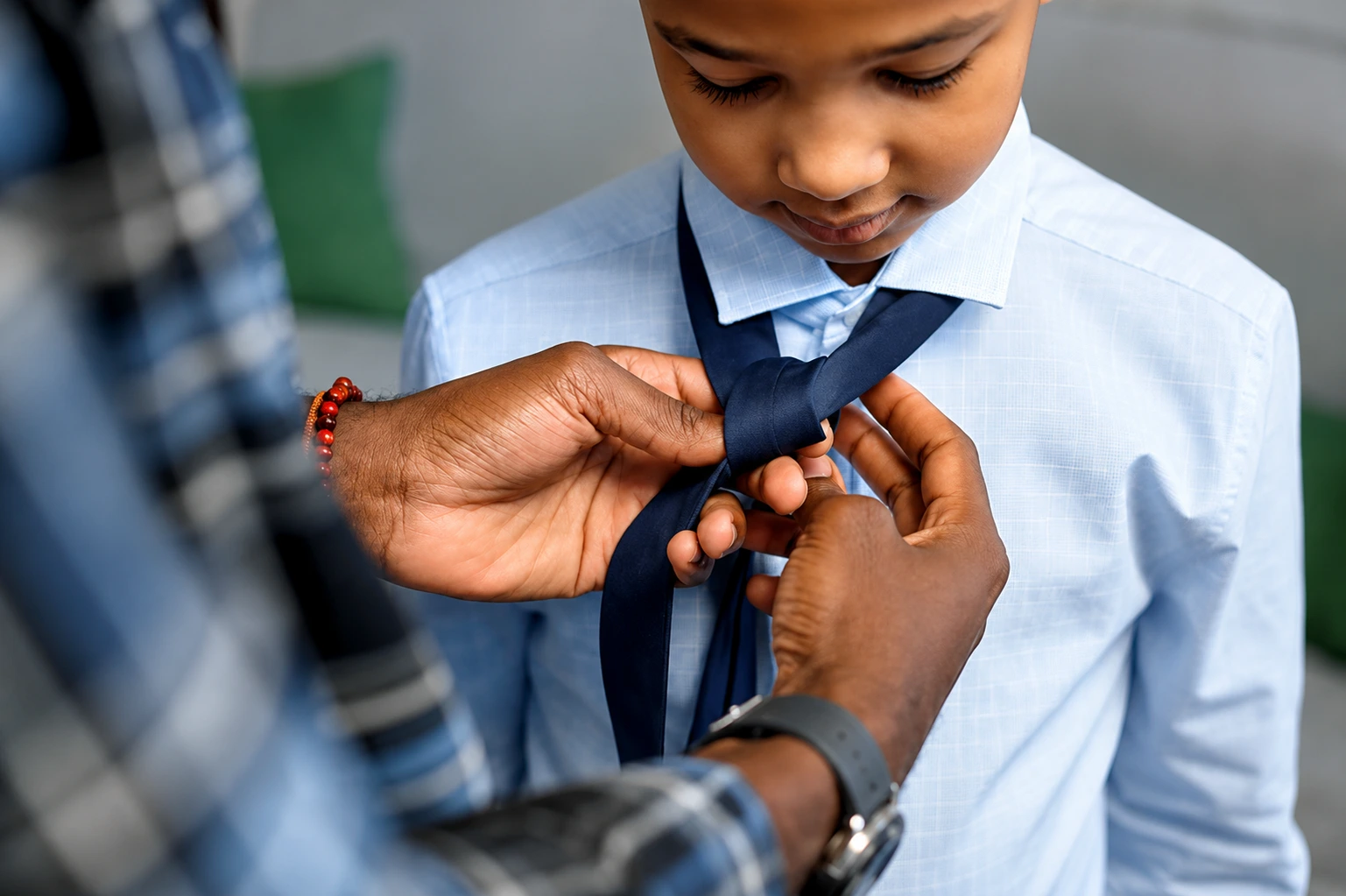
Good manners are not just about politeness, they teach empathy, respect and consideration for others. According to a Harvard Graduate School of Education report, these social skills are critical predictors of long-term success, often overshadowing academic achievement.
Manners are not an addition to the qualities that make a child successful, they are the mechanism through which those qualities develop. A child learning to listen without interrupting is building emotional regulation. A child learning to greet confidently is building self-assurance. The polite behaviour on the surface is the visible expression of something much deeper taking shape underneath.
Key Takeaway: Manners are not social polish, they are a developmental mechanism. Teaching them early builds the empathy, emotional regulation and social intelligence that research identifies as more predictive of lifelong success than academic achievement alone.
What the Research Says About Manners and Long-Term Success
The evidence on what good manners do for children across their lives is more robust and more specific than most parents realise.
What the research shows:
| Finding | Source |
Children who engage in polite practices are viewed with more fondness and acceptance by peers and educators, enhancing their confidence and social integration | Journal of Applied Developmental Psychology |
Social skills including manners are critical predictors of long-term success, often outweighing academic achievement | Harvard Graduate School of Education report |
Children taught good manners early show better social skills, self-discipline and emotional intelligence across development | Sparkles Early Learning Academy, citing child development research, December 2024 |
Social and emotional learning programs improve academic performance and social adaptation, contributing to long-term psychological health | NIH / PMC – Social-Emotional Learning study, 2024 |
Children with strong social skills often perform better academically, experience fewer behavioural challenges, and feel more connected to their peers | Child development research consensus, 2024–2025 |
What emerges is not that manners are a nice-to-have, rather it is that the habits they build: attentiveness, consideration, self-regulation, interpersonal warmth, are the qualities that predict success across every domain a child will ever enter.
Children who start out with social etiquette training show better emotional intelligence, achieve school success, and master relationship skills later as they move through life.
And the timing matters significantly. Children at a young age have incredibly absorbent brains. They remember what they are taught with clarity and their minds absorb everything much faster than they would at a later age. The earlier manners are taught and consistently modelled, the more deeply they are embedded as natural behaviour rather than effortful performance.
Key Takeaway: Research consistently links early manners teaching to better peer acceptance, stronger emotional intelligence, greater academic success and improved long-term professional and personal outcomes. The earlier the habits are formed, the more naturally they are carried into adulthood.
The 7 Life Areas Where Early Manners Teaching Makes the Biggest Difference
Understanding precisely how manners teaching translates into lifelong advantage helps parents see it not as an isolated social task but as an investment with returns across every area of their child’s life. Manners work hand in hand with core principles, supporting the Core Values to Teach Children: 5 Best Lessons (Ages 7–11) that anchor a child’s character development.
1. Friendships and Peer Relationships
Children who engage in polite practices are viewed with more fondness and acceptance among peers and educators, further enhancing their confidence and acceptance.
A child who greets warmly, listens attentively, and navigates disagreement respectfully is genuinely easier to befriend. These behaviours build the quality of friendships that protect mental health, reduce loneliness and create the belonging children need to thrive.
2. Academic Performance
The connection between manners and academic success surprises many parents but the research is consistent. A child who listens without interrupting, waits their turn, and engages respectfully with a teacher gets more from every lesson.
Social and emotional learning programs in classrooms may effectively control problem behaviours and improve academic performance and social adaptation, contributing to the long-term development of psychological health and social skills.
A well-mannered child is not just better liked by teachers, they are better positioned to learn from them.
3. Emotional Intelligence and Self-Regulation
Every manner a child learns is an exercise in emotional regulation. Waiting to speak teaches impulse control. Thanking genuinely teaches appreciation. Apologising properly teaches the ability to acknowledge impact and repair.
When kids grow up practising courtesy and empathy, they are better equipped to handle teamwork, friendships and conflict resolution as they mature.
4. Confidence and Self-Assurance
There is a strong and often overlooked connection between good manners and genuine confidence. Teaching manners from an early age sets children up for success in both personal and professional lives and boosts confidence. A child who has practised greeting people, engaging in conversation, and responding graciously has real evidence from real experience that they can handle social situations. That evidence builds genuine self-assurance.
5. Professional Success in Adulthood
The professional implications of early manners teaching are significant and specific. From bosses to colleagues, good manners can make or break an opportunity; If your child is up for their first job and their credentials match another candidate’s, the more polite and mannered candidate may end up with the job.
This is not hyperbole, it reflects the well-documented reality that interpersonal skills, including how a person communicates, acknowledges others, and handles professional social situations, are consistently cited by employers as decisive differentiators among equally qualified candidates.
The habits built between ages 7 and 11 – listening well, expressing gratitude, apologising genuinely, greeting with confidence are the exact behaviours that distinguish candidates in interviews, employees in teams and leaders in organisations.
6. Resilience and Conflict Resolution
A child who has learnt to handle disagreement respectfully, apologise genuinely, and engage with others’ perspectives has a foundational resilience skill that most adults still struggle with. When kids grow up practising courtesy and empathy, they are better equipped to handle conflict resolution as they mature.
Conflict is inevitable – in friendships, in family, in work, in every area of life. The child who has been taught that disagreement can be navigated with respect rather than aggression has been given a tool of immeasurable value.
7. Contribution to Society and Community
It is not just your child’s future that is affected by their manners, it is the civility of the culture and society in which we live. Good manners set a standard of behaviour that helps keep order and civility in society. A child raised with genuine good manners contributes something to every space they enter. This is not a small thing, it is the oldest and most reliable form of social contribution there is.
Key Takeaway: Teaching manners early builds advantage across seven life areas: friendships, academic performance, emotional intelligence, confidence, professional success, resilience, and community contribution. These are not separate outcomes, they grow from the same root, built one manner at a time in childhood.
How to Start Teaching Manners Early Without the Battles
The most common reason manners teaching stalls is not a lack of effort; rather it is an approach that produces resistance rather than learning. Here’s what the research and best practice consistently recommend.
Step 1: Start With One Manner at a Time
Trying to address every manner at once produces overwhelm in the child and in the parent. Pick one. Focus on it for about 14 days. Praise it consistently then, move to the next.
Consistency is key. If you expect your child to say “please” at home, hold the same expectation in other settings like playdates or family outings. Repetition helps reinforce the lesson until it becomes second nature.
The manner that becomes natural first becomes the foundation for everything that follows.
Step 2: Model Before You Mandate
Good manners and language, and affection are all learnt by kids when they look at how their parents, siblings and friends interact in the social world.
The single most powerful manners-teaching tool available to any parent is their own consistent behaviour. A child who hears “please” and “thank you” used naturally in their home, who sees their parent greet people warmly and apologise genuinely, absorbs those behaviours as the normal way humans interact.
Model what you expect without exception.
Step 3: Explain the “Why” Every Time
At ages 7–11, children are cognitively ready to understand reasoning, not just comply with rules. The parent who explains why a manner matters produces a child who understands it. The parent who only demands compliance produces a child who performs it when watched.
How to apply it: Replace “say thank you” with “when Grandma gives you something, telling her thank you shows her you noticed.” Replace “stop interrupting” with “when you interrupt, the other person feels their words don’t matter. How would that feel?” The “why” transforms a rule into a value.
Step 4: Praise Specifically and Connect to Identity
Generic praise, “good manners today!” fades quickly. Specific, identity-linked praise builds lasting character.
“You thanked your teacher without being reminded. That is exactly the kind of thoughtful person you are.” Children grow into the identity we consistently reflect back to them. Praise the character, not just the behaviour.
Step 5: Use Stories to Reinforce What You Teach
Values such as mutual cooperation, respect for others and good manners are absorbed more readily when taught through meaningful activities that reflect the child’s cultural context.
Stories are one of the most effective ways to reinforce manners without lecturing. When a character chooses to greet someone warmly or handles a disagreement respectfully, a child sees what those values look like in action, in a context that feels real.
This is the philosophy at the heart of the 101 Shapes of Manners series illustrated stories for children ages 7–11 where characters navigate real social situations, making manners feel worth having rather than imposed.
“The child who understands why manners matter will practise them in every room. The child who has only been told to will practise them in yours.”
For a deeper look into the science behind this approach, read more about Why Illustrated Books Teach Children Morals Better
Key Takeaway: Teaching manners early works best through five consistent practices: one manner at a time, modelling before mandating, explaining the why, praising identity over compliance, and using stories to make values feel worth having. Together these approaches build habits, not performances.
The Most Common Mistake Parents Make With Manners
After all the strategies and research, there is one mistake that undoes more manners teaching than any other and most parents make it without realising.

‘They correct in public and praise in private or not at all.’
A child corrected publicly learns that manners are about performance for an audience, not values they hold privately. Public correction produces shame. Shame produces avoidance.
The correction that works is quiet, specific and private. The praise that builds character is public, specific, and immediate.
The second most common mistake is inconsistency. Manners expected in some contexts but not others become context-dependent performances, not values. If please and thank you matter at Grandma’s house but not at Tuesday’s dinner, the message is clear: this is about impression management.
Consistency delivered with warmth, not rigidity is what builds habits that last.
The Bottom Line
Teaching manners early is not about producing a child who performs politeness for approval. It is about equipping a child with the social intelligence, emotional regulation and interpersonal skills to navigate every room they will ever enter.
The importance of manners extends beyond the walls of childhood. It moulds not only who your children are but who they will be. The goal is not just to raise a polite child at the dinner table, it is to have a capable, considerate adult at every table that follows.
Start with one manner, model it daily, explain why it matters and make it a habit to praise who your child is becoming.
📖 Be the First to Discover 101 Shapes of Manners
The 101 Shapes of Manners is a brand-new illustrated social-emotional learning fiction series for children ages 7–11 built to make the values behind good manners feel worth having, through characters and stories children genuinely love.
Because the best time to teach a child manners is early and the best way to teach them is through a story they will never forget.
👉 [Join the Waitlist Now] — Get exclusive early access and be the first to know when we launch.
Frequently Asked Questions
Why is teaching manners early so important?
Children show basic empathy from infancy; mirroring a caregiver’s emotions and responding to others’ distress. By ages 2–3, toddlers begin comforting others. However, the most significant development is cognitive empathy, which emerges between ages 7 and 11. This is the ability to understand another person’s experience even when it differs from your own, and it is the form most responsive to deliberate teaching.
Do manners actually affect a child’s success in life?
Yes, and the research is specific. Harvard Graduate School of Education identifies social skills, including manners, as critical predictors of long-term success often outweighing academic achievement. Children who engage in polite practices are viewed more favourably by peers and teachers, and experience stronger emotional regulation and confidence. In professional contexts, interpersonal skills are consistently cited by employers as decisive differentiators among equally qualified candidates.
At what age should I start teaching my child manners?
Basic manners can begin from ages 2–3 through gentle modelling. However, ages 7–11 is the most important window for values-based manners teaching: when children are cognitively ready to understand why manners matter rather than simply comply. The habits built during these years are the most likely to be carried naturally into adolescence and adulthood.
How do manners help children academically?
Manners build competencies that directly support academic success: listening without interrupting (attention), waiting for a turn (impulse control), and respectful engagement with teachers and peers (collaborative learning). Research consistently shows children with stronger interpersonal and self-regulatory skills perform better academically and experience fewer behavioural challenges.
What is the best way to teach manners to a child ages 7–11?
The most effective approach combines: one manner at a time, consistent modelling, explaining the reasoning rather than issuing rules, praising behaviour and connecting it to identity, and using stories. Children ages 7–11 are particularly responsive to the “why” – understanding why a manner matters is what transforms it from an external rule into an internal value.
Is it too late to teach manners if my child is already 10 or 11?
Never, this age group is particularly well-suited to manners teaching. Children ages 10–11 are at peak readiness for values-based reasoning and can appreciate the genuine social advantages good manners bring. Frame manners not as rules to follow but as social skills that give them a real advantage in friendships, school and every context that matters to them.
101 Shapes of Manners is an upcoming illustrated social-emotional learning fiction series for children ages 7–11. Join the waitlist to be the first to access the series when it launches.