

Introduction
How to build emotional intelligence in children is one of those questions that sounds like it belongs in a therapy office, all acronyms and clinical frameworks most parents would never remember on a Tuesday evening when their child is melting down over a maths problem.
It does not belong there. Emotional intelligence (EI) is built at home, in ordinary moments, through the responses and habits parents practise daily. No psychology degree is required or specialist training needed. Just an understanding of what EI actually is, why it matters and what everyday actions build it, in plain English, for ages 7–11.
Table of Contents
TL;DR
Emotional intelligence, the ability to identify, understand, express and manage emotions in yourself and others is a more reliable predictor of long-term success than IQ. It is built primarily through parent-child interaction during the primary school years. The 8 most effective home-based strategies are: naming emotions, validating feelings, emotion coaching, modelling your own EI, building emotional vocabulary, using stories, teaching the body-emotion connection and creating a calm-down toolkit. Ages 7–11 is the window where these habits become permanent.
What Emotional Intelligence Actually Is And How to Build Emotional Intelligence in Children
Emotional intelligence is not about being calm all the time, never getting angry, or always knowing the right thing to say. It is not a personality type and it is not the same as being emotionally sensitive.
In plain terms: emotional intelligence is the ability to notice, understand, express and manage your own emotions as well as to notice and respond to the emotions of others helpfully.
Emotional intelligence encompasses awareness, understanding and the ability to express and manage one’s emotions.
A child with high EI notices frustration before exploding, names feelings accurately, chooses responses rather than reacting, and recovers without getting stuck. A child with low EI is not a bad child, just one who has not yet had the experiences to build these capacities. They can always be built.
Key Takeaway: Emotional intelligence is the ability to notice, understand, express and manage emotions in yourself and others. It is not a temperament or a personality type. It is a skill set that is built through specific experiences, and it is never too late to start.
Why Emotional Intelligence Matters More Than You May Realise
Most parents focus on academic achievement as the primary predictor of their child’s future success. The research has been quietly moving in a different direction for years.
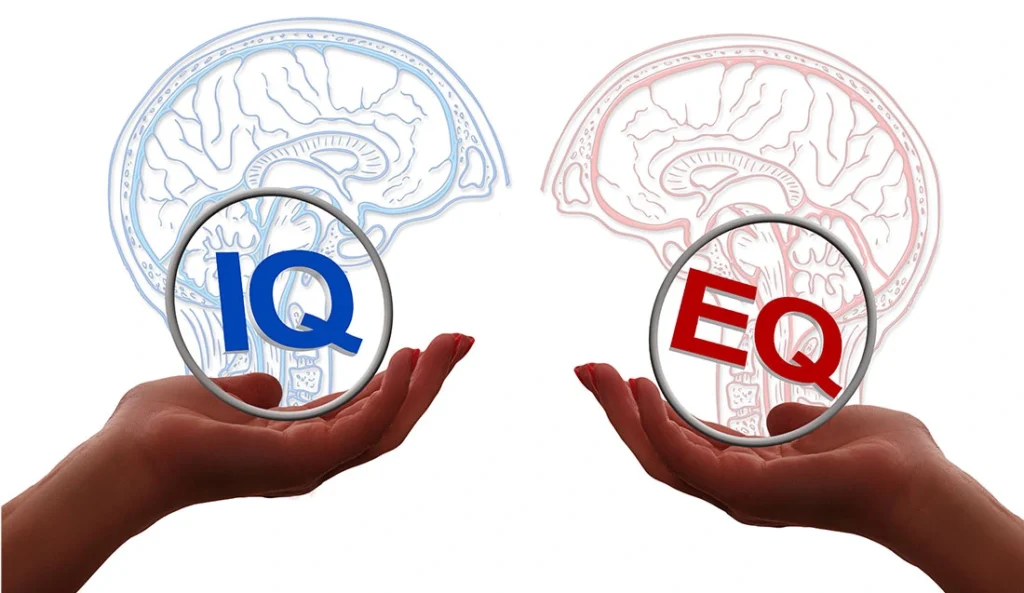
Research indicates that emotional intelligence is a more reliable predictor of future success than traditional measures like IQ.
The influence of emotional intelligence on child development is profound. Research shows that children who cultivate higher emotional intelligence experience better attention spans, improved school engagement, and stronger social relationships. These skills contribute not just to academic success but also to lifelong emotional health, fundamentally shaping a child’s ability to navigate challenges and build meaningful connections.
The specific outcomes linked to higher emotional intelligence in children are striking.
What the research shows:
| Finding | Source |
Social-emotional learning programmes deliver an 11:1 return on investment | Yale University / Dr. Marc Brackett, cited in Early Years TV, 2025 |
Children with higher emotional intelligence have lower anxiety, depression and aggression levels | Research with 410 primary school students, Best Choice Counselling, 2025 |
| Dr. Gottman’s research shows children of emotion-coaching parents are physically healthier, do better academically and have better friendships | Gottman Institute, May 2026 |
| Neural patterns for processing emotional cues are mostly set by school age, making early intervention highest impact | Brain scan research, children aged 5–15, Best Choice Counselling, 2025 |
| 78% of parents now want emotional intelligence included in school curricula | Early Years TV research summary, November 2025 |
Emotional intelligence is not a supplementary quality, it is a foundational competency that predicts outcomes in health, relationships, academic performance and career success more reliably than academic aptitude alone.
Key Takeaway: Emotional intelligence predicts long-term success more reliably than IQ including academic performance, relationship quality, mental health and professional outcomes. Building it during the primary school years is one of the highest-return investments a parent can make.
Why Ages 7–11 Is the Critical Window
By age four, children use basic strategies to manage distress; by age ten, they use more complex methods for emotional regulation. Between ages 7 and 11, three things happen simultaneously that make this window critical:
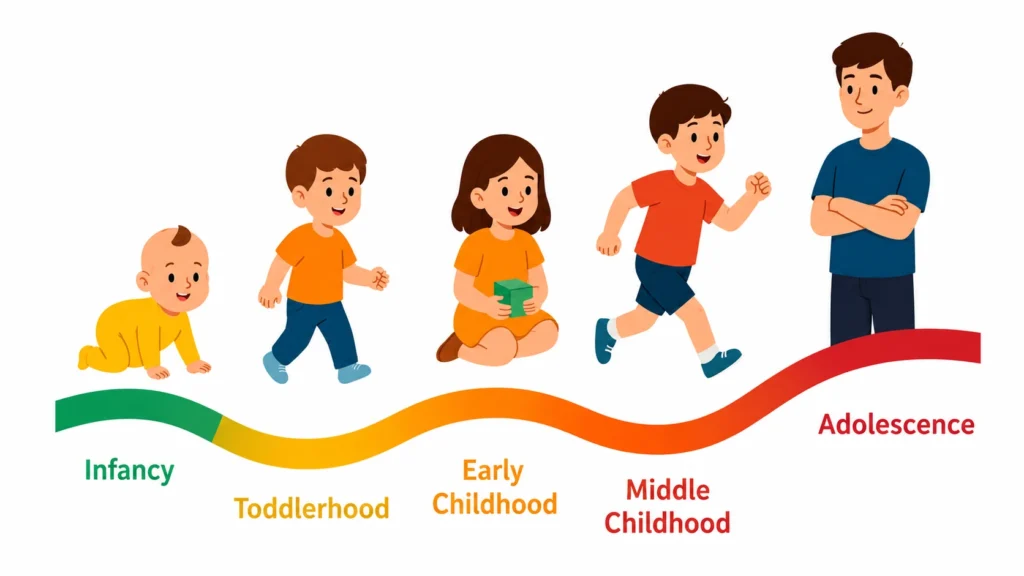
The brain is developing rapidly. Brain scans from hundreds of children aged 5 to 15 reveal that neural patterns for processing emotional cues are mostly set by school age.
Emotional complexity is increasing. Children now experience nuanced emotions such as: embarrassment, guilt, pride, moral discomfort in a social world complex enough to generate them regularly. Without vocabulary and tools, they default to whatever coping strategies they have, which are often unhelpful.
Self-regulation is becoming possible. It is not until age 10 that children consistently use more complex strategies for emotional self-regulation, solving the problem or tolerating the emotion. Between 7 and 10, they are building the strategies they will rely on for life. Parental guidance during this window shapes which strategies become default.
The 5 Components of Emotional Intelligence (Made Simple)
The most widely used framework identifies five components, simply put:
| Component | What It Means in Simple Terms | What It Looks Like in a Child |
| Self-awareness | Knowing what you are feeling and why | “I’m upset because I felt left out, not because the game was unfair” |
| Self-regulation | Managing your emotions, choosing how to respond | Taking a breath before snapping; walking away before exploding |
| Motivation | Using emotions to drive towards goals | Feeling disappointed and using it as fuel to try again |
| Empathy | Noticing and understanding what others feel | “My friend seems sad, I’m going to check on them” |
| Social skills | Navigating relationships using emotional awareness | Handling disagreement without losing the friendship |
These five are interconnected, building one strengthens the others. All are built primarily through the parent-child relationship during the primary school years.
8 Ways to Build Emotional Intelligence at Home
1. Name Emotions – Early, Often and Specifically
The most foundational EI skill is the ability to identify and name what you are feeling. A child who cannot name an emotion cannot begin to manage it. And the richer a child’s emotional vocabulary, the more precisely they can understand and regulate their own inner experience.
How to apply it: Name emotions you observe in your child specifically and without judgement: “You seem really disappointed that they changed the plans.” Introduce one new emotion word per week: conflicted, apprehensive, deflated, humiliated, elated. Point out emotional nuances in stories and films: “Is she sad or is she more embarrassed? What’s the difference?”
2. Validate First, Always
A “calm-down toolkit,” personalised by the child and practised when they are not upset, builds familiarity with the tools before they are needed urgently.
Before any toolkit, comes validation. When feelings are dismissed – “you’re fine,” “stop being dramatic”, children learn that emotions are shameful and should be hidden.
How to apply it: Before offering solutions, reflect: “That sounds really frustrating. Tell me what happened.” Validation is not agreement, you can validate a feeling without endorsing how it was expressed. “It makes sense you were angry. It doesn’t make it okay to shout. Let’s figure out what to do with that.”
3. Practise Emotion Coaching
Dr. Gottman’s research shows children of emotion-coaching parents are physically healthier, do better in school and get along better with friends.
Emotion coaching is not therapy, it is a five-step conversational approach: notice the emotion, see it as a connection opportunity, listen and validate, help name the feeling, then problem-solve together once they are calm.
How to apply it: When your child is upset, resist the urge to fix immediately. Sit with the feeling first: “What do you think made that feel so hard?” Once calm: “What could you do if that happens again?”
4. Model Your Own Emotional Intelligence – Out Loud
Children learn emotional skills overwhelmingly through observation. Modelling behaviour, demonstrating healthy emotional responses and coping strategies helps children learn appropriate ways to express and manage their feelings.
How to apply it: Narrate your own emotional experience: “I’m feeling frustrated. I’m going to take a few minutes before I respond.” When you handle an emotion poorly, and you say so: “I snapped and I shouldn’t have. I was stressed and I took it out on you. I’m sorry.” Modelling repair is as powerful as modelling perfection.
5. Build the Emotional Vocabulary Deliberately
Activities that build emotional vocabulary enhance children’s ability to express and manage feelings effectively. A child who only has words for “happy,” “sad,” and “angry” is working with a blunt instrument. The more granular the vocabulary – disappointed vs devastated, nervous vs terrified, frustrated vs furious, the more precisely they can identify, communicate and manage what they feel.
How to apply it: Use an emotion wheel as a dinner table starter. Discuss emotional nuances in books: “Is she sad or more embarrassed?” Play “feelings charades”, act out an emotion, let the child name it as specifically as they can.
6. Use Stories as Emotional Intelligence Laboratories
When watching movies or reading books, ask if the characters responded with kindness and if not, brainstorm how they could have reacted differently. These discussions build emotional intelligence.
Stories allow children to process emotional situations at a safe distance: practising empathy and emotional identification without the stakes being personal. This is central to the 101 Shapes of Manners series, illustrated stories for children ages 7–11 where characters navigate real emotional challenges, building templates that transfer directly to the child’s own life.
“A child who has felt what it is like to manage a hard emotion through a character they love is already practising emotional intelligence before they need it in real life.”
7. Teach the Body-Emotion Connection
Emotional regulation begins in the body, not the mind. Before a child can manage an emotion, they need to be able to notice it in their physical experience. The racing heart before anger peaks. The tight chest before tears. The butterflies that signal anxiety.
Breathing exercises, movement breaks and sensory strategies help the nervous system return to a state where reasoning is possible. “What did you notice in your body before things got really big?” develops early-warning awareness that lets children intervene before dysregulation peaks.
How to apply it: Ask body-awareness questions in calm moments: “Where do you feel excited in your body? Where does worry live?” Teach one simple regulation technique and practise it when your child is calm before they need it.
8. Create a Calm-Down Toolkit Together
A calm-down toolkit, personalised by the child and practised when they are not upset, builds familiarity with tools before they are needed urgently. Crucially, when children are given this sense of agency, they are far more likely to actually use it.
This is not a naughty corner. It is a resource, a set of strategies a child has chosen and practised, available to them when they need it most.
How to apply it: Build it together during a calm moment: “When you’re overwhelmed, what two or three things help you feel better?” The answers might surprise you; drawing, music, a tight hug, a heavy blanket. Make a list, keep it visible, and refer to it when needed: “Your toolkit is right there, what do you want to try?”
Key Takeaway: The 8 most effective strategies are: naming emotions, validating first, emotion coaching, modelling your own EI, building emotional vocabulary, using stories, teaching the body-emotion connection and creating a calm-down toolkit. None require specialist training, only consistency.
The Mistakes That Quietly Undermine Emotional Intelligence
Most of these come from the best intentions which is why naming them specifically matters.
Dismissing emotions. “You’re fine. It’s not a big deal.” When feelings are consistently minimised, children learn their emotional experience is wrong or excessive and stop bringing it to you.
Fixing too quickly. Jumping to solutions before the emotion is processed skips the most important step. A child still inside the emotional experience cannot engage with problem-solving. Validate first then, solve second.
Punishing emotional expression. Sending a child to their room for crying, withdrawing affection when they are angry, expressing disappointment when they are scared, these teach children that certain emotions are unacceptable. They learn to hide them, not manage them.
Modelling poor regulation. Exploding under stress, saying things in anger, avoiding difficult conversations, these teach children the coping strategies available to them. Model what you want to build.
Expecting regulation before the brain is ready. A seven-year-old cannot reliably regulate strong emotions, the prefrontal cortex is still developing. Meeting normal dysregulation with harsh punishment builds shame, not regulation.
The Bottom Line
Emotional intelligence is built at the dinner table, in the car on the way home, in the twenty minutes after a meltdown when a parent sits and helps a child understand what just happened. Small, consistent moments like; a feeling named, a frustration validated, a story discussed. All of it requires just presence.
Start today, name one emotion you notice in your child and validate it before you fix it. That’s enough.
📖 Be the First to Discover 101 Shapes of Manners
The 101 Shapes of Manners is a brand-new illustrated social-emotional learning fiction series for children ages 7–11 building emotional intelligence, kindness, empathy and good character through characters and stories children genuinely connect with.
Because the child who understands their own feelings is far better equipped to understand and care for the feelings of others.
👉 [Join the Waitlist Now] — Get exclusive early access and be the first to know when we launch.
Frequently Asked Questions
What is emotional intelligence in children and why does it matter?
Emotional intelligence is the ability to identify, understand, express and manage emotions in yourself and others. Research identifies it as a more reliable predictor of long-term success than IQ, linked to better academic performance, stronger friendships, lower anxiety, and greater professional success. For ages 7–11, it is built primarily through parent-child interaction in everyday moments.
At what age does emotional intelligence develop in children?
Basic emotional awareness begins in infancy. The most significant development particularly self-regulation and empathy happens between ages 7 and 11. Brain imaging shows that neural patterns for processing emotional cues are largely set by school age, making the primary years the highest-impact window for intentional EI-building.
What is emotion coaching and how do I do it?
Emotion coaching is a five-step approach developed by Dr. John Gottman: notice the emotion, see it as a connection opportunity, listen and validate, help name it accurately, then problem-solve once calm. Research shows emotion-coached children are physically healthier, perform better academically, and have stronger friendships. It requires no specialist training, only consistency and the willingness to sit with a feeling before rushing to fix it.
How do I build emotional intelligence without using complicated techniques?
Name emotions you observe. Validate feelings before offering solutions. Model your own regulation out loud including imperfect moments. Read stories together and discuss how characters feel. Ask “where do you feel that in your body?” Build a calm-down toolkit together. None require training, only consistency.
Can books and stories build emotional intelligence in children?
Yes, stories allow children to practise emotional identification and empathy at a safe distance. When a child reads about a character managing anger or repairing a friendship, they build emotional templates that transfer to their own life. Open questions after reading: “why do you think the character felt that way?”, activate the reflective capacity at the core of emotional intelligence.
What is the difference between emotional intelligence and emotional sensitivity?
Emotional sensitivity is the degree to which a person is affected by emotions. Emotional intelligence is the capacity to work skilfully with them – to notice, name, understand and manage them. A highly sensitive child can develop very high EI. A less sensitive child can too. The two are related but distinct, and both can be developed regardless of temperament.
101 Shapes of Manners is an upcoming illustrated social-emotional learning fiction series for children ages 7–11. Join the waitlist to be the first to access the series when it launches.